HRIS Dashboard
A company-and-employee HR platform for Tricor's Asia offices, built so payroll, time and employee records stay in sync in real time, from a Hong Kong head office to every market it serves.
Visit tricorunify.com- Client
- Sector
- Role
- Team
- Period
- Markets
- Surface
Overview
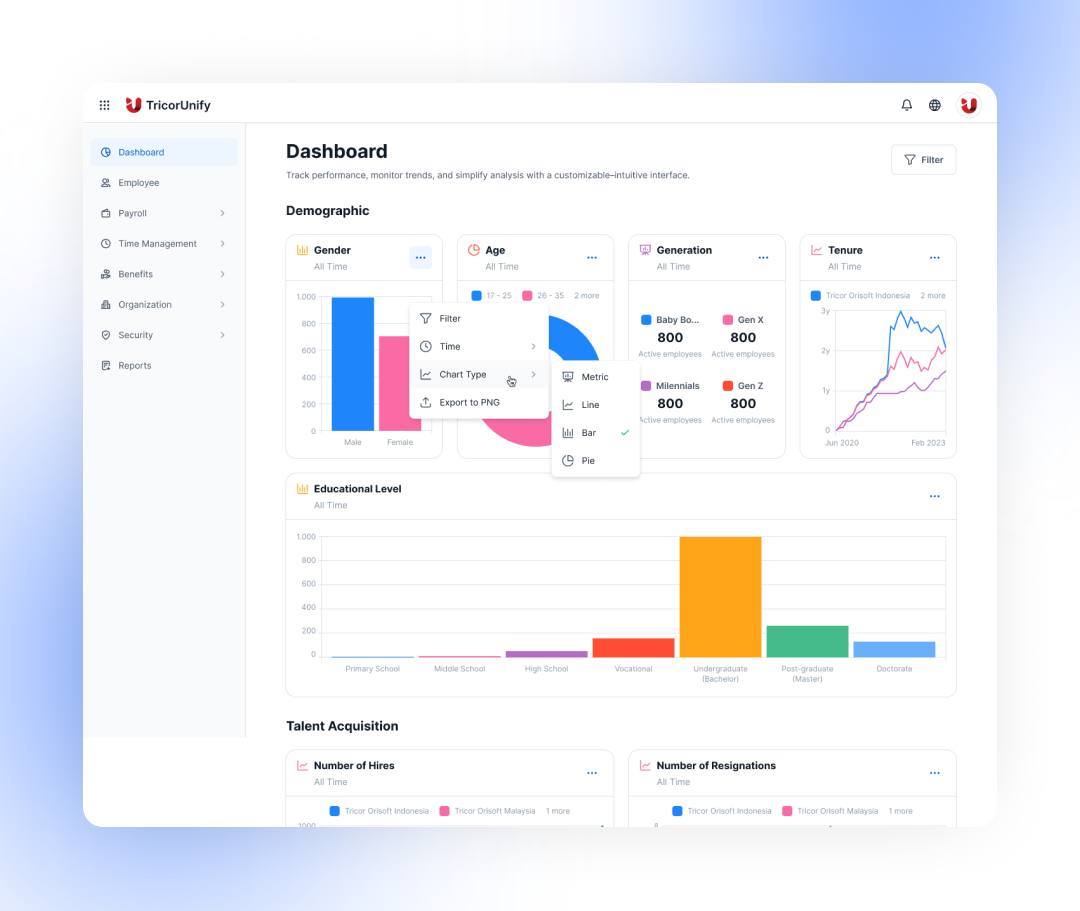
TricorUnify runs Tricor Group's HR for offices across Asia out of Hong Kong, real-time in every market. I designed the shared shell: one dashboard, one table pattern, one filter, so whichever module a manager or employee opens next still feels like the same product.
Scope
- 01Stakeholder interviews
- 02Company & employee IA
- 03Multi-country data model
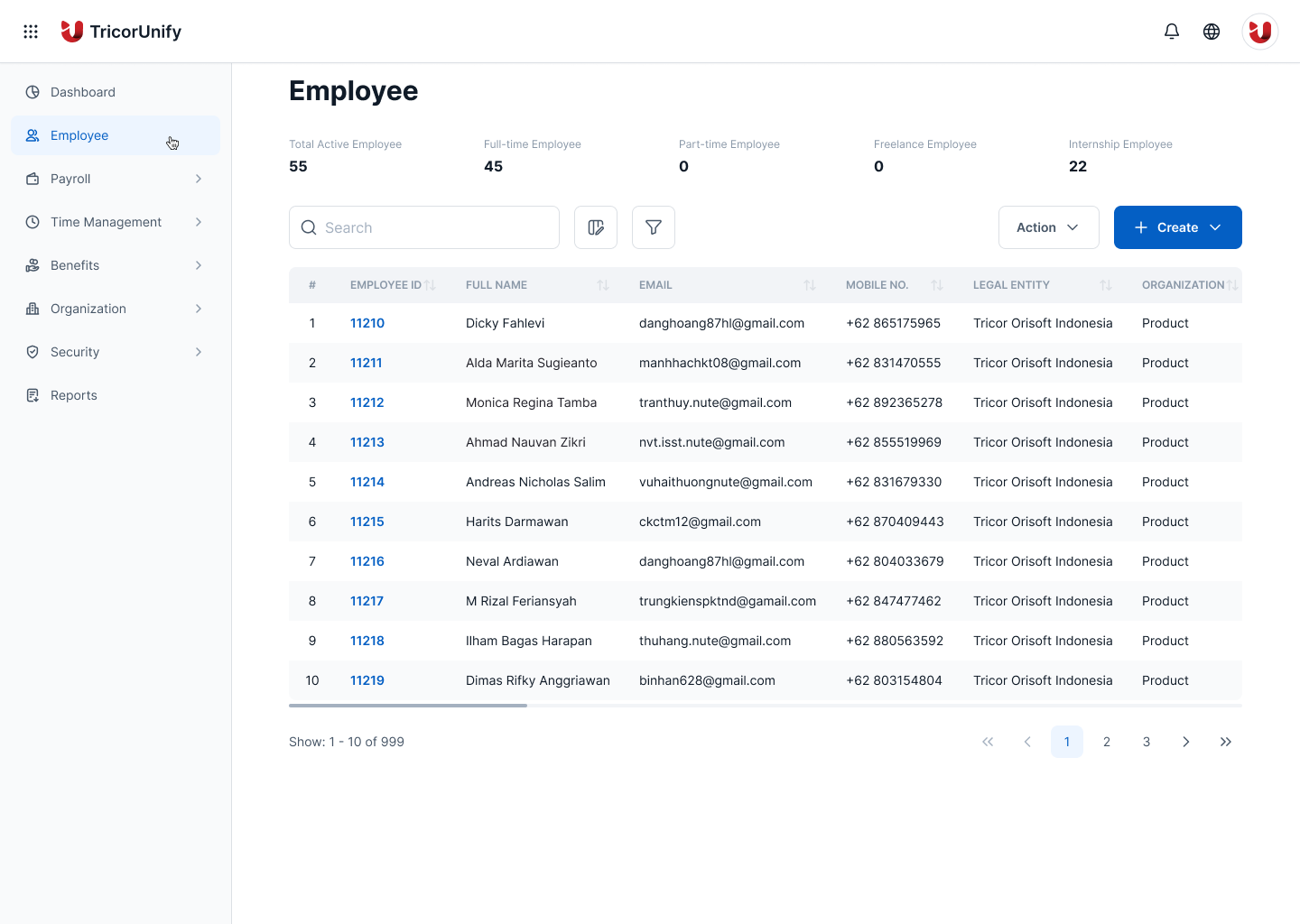
- 04Data table & filter system
- 05User flows
- 06Wireframes
- 07Interface design
- 08Data visualisation
- 09Design system
- 10Design QA
Problem
Every country read a different version of the truth.
TricorUnify runs HR for Tricor Group's offices across Asia out of a Hong Kong head office, so an employee's record, leave balance and payroll status had to match the moment they changed, no matter which country's HR team or which employee opened them next. Data that synced overnight, not the instant a manager approved it, meant two people looking at the same profile could be looking at two different truths.
The product had also grown two audiences that didn't share a design language: an admin console for the Company side, and a self-service view for the Employee side, each shipped as if the other didn't exist. A payroll update an admin made in Hong Kong had no visible echo on the employee's own payroll tab, so trust in the number depended on a phone call, not the screen.
Approach
One shell, two sides, real-time by default.
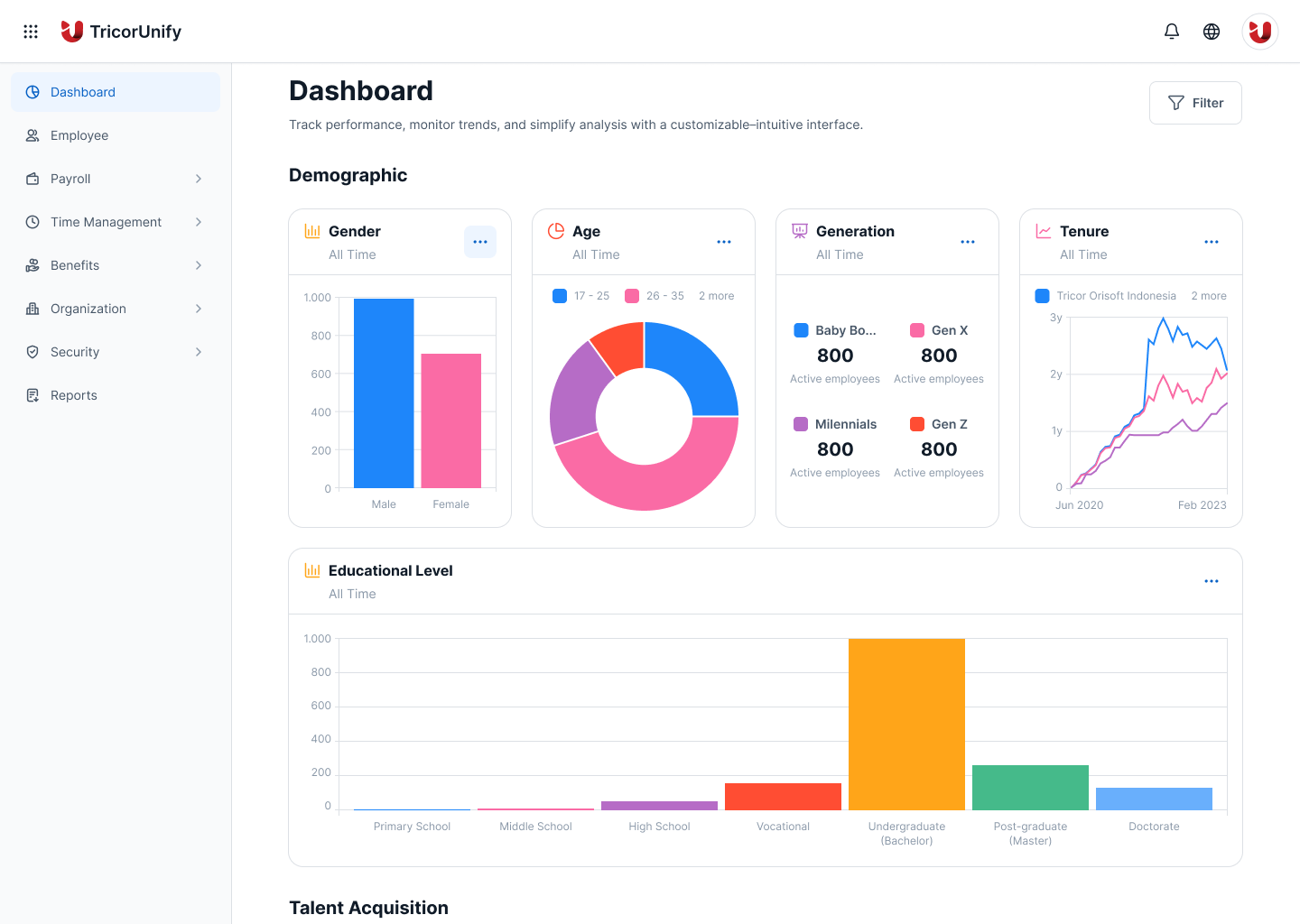
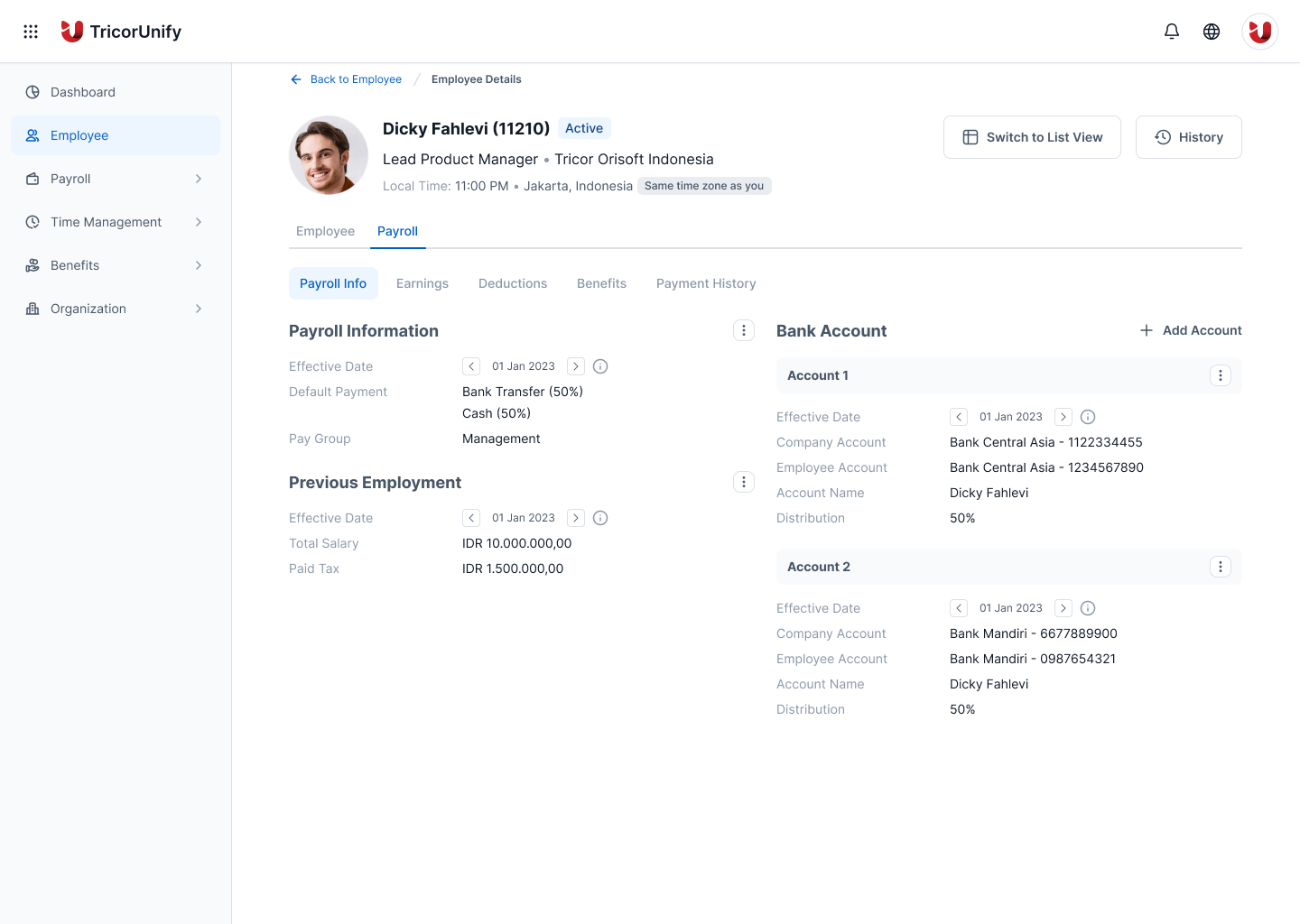
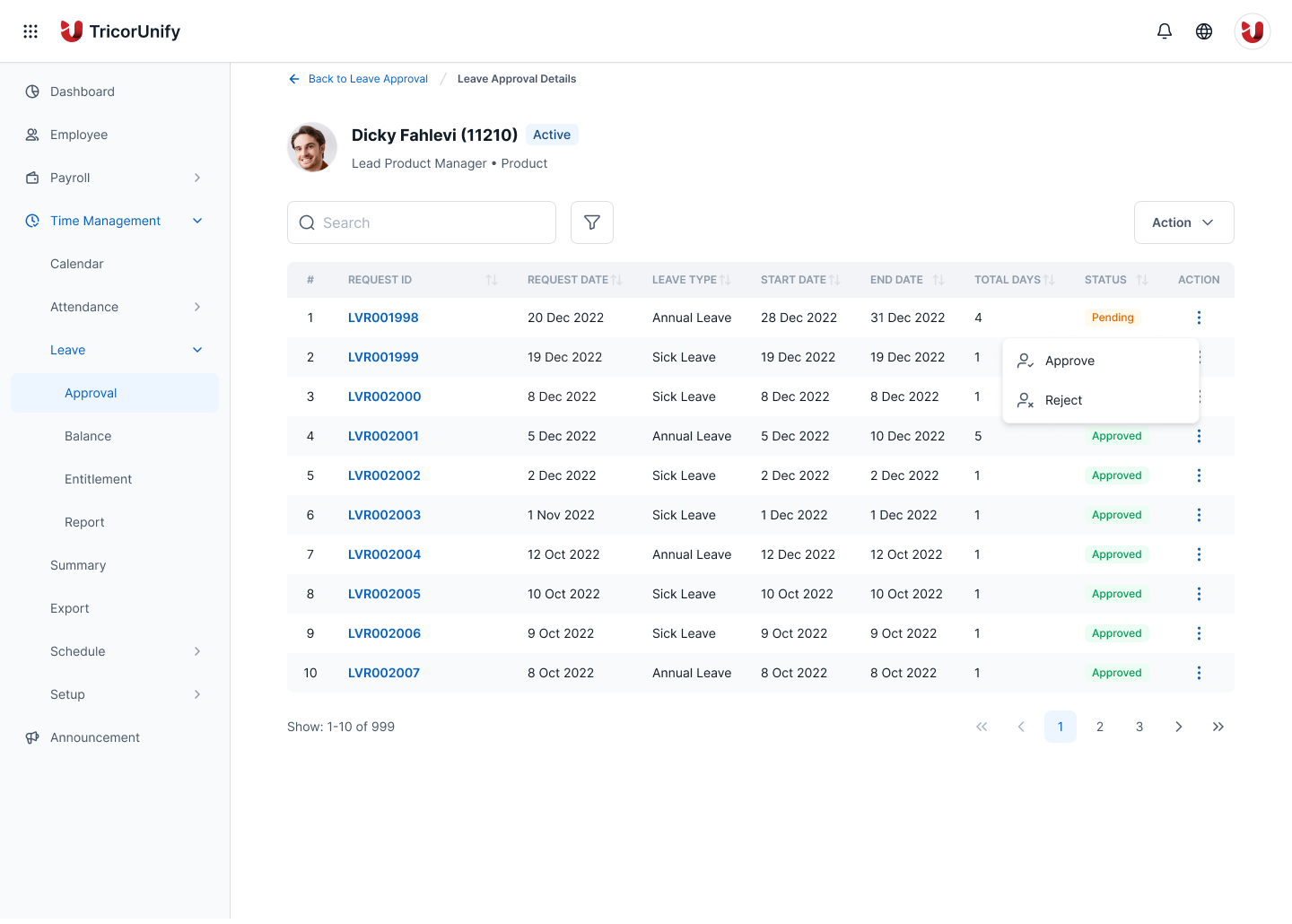
Every module (Dashboard, Employee, Payroll, Time Management, Benefits) now reads from the same live data layer instead of a nightly batch, so an approval, a new hire or a payroll change shows up the same second on both the Company console and the Employee self-service view, in whichever country it happened.
Company and Employee sides share one table, filter and chart-type pattern instead of two design languages, so an HR admin at the Hong Kong head office and an employee at a branch office are reading the same product, not two products that happen to share a login screen.
Screens
Results
Deliverables